What is a good THC percentage?
Typical THC ranges for flower, concentrates and edibles, why a higher number is not a better product, and how far label numbers can be trusted.

Key points
- Flower commonly tests around 15 to 20% THC; concentrates 60 to 90%.
- Higher THC means stronger, and regulators link higher amounts to more negative effects.
- One Colorado study found most flower tested well below its label.
There is no single good number. Washington's cannabis regulator reports that flower averages 15 to 20% THC, with some as high as 35%, and that concentrates generally range from 60 to 90%. A higher percentage means a stronger product, not a better one, and label numbers can run high.
Typical THC percentages by product
| Product | Typical range | Note |
|---|---|---|
| Flower | 15 to 20% average, some as high as 35% | Washington's 2022 average was 21% |
| Concentrates (wax, rosin, shatter, hash oil) | 60 to 90% | Washington's 2022 average was 69% |
| Kief and hash | 50 to 80% | Lower than other concentrates |
| Edibles | Measured in milligrams, not percent | Washington caps a serving at 10 mg of THC |
These figures come from the Washington State Liquor and Cannabis Board, which publishes ranges for its regulated market. Other states' markets will differ, but the order of magnitude holds: flower in the teens to twenties, concentrates several times higher.
Is a higher THC percentage better?
It is stronger, which is not the same thing. The Washington regulator states that "research shows that the higher the amount of THC a person uses, the more likely they are to experience negative health effects," and notes that with concentrates "the effect is felt more quickly and intensely."
Washington State Liquor and Cannabis Board
For context, the same source puts the THC concentration of dried cannabis harvested in the 1990s at about 5%. Today's average flower is three to four times that.
How accurate are THC labels?
Less than the decimal point suggests. Researchers bought 23 flower samples from 10 Colorado dispensaries and tested them. The average was 14.98% THC, and about 70% of samples were more than 15% below the number on the label.
Schwabe et al., PLOS ONE (2023)
The authors point to a lack of standardized testing and to financial incentives to market high numbers. The study was small and covered one region, so read it as a caution about treating a label as exact, not as a rule for every product.
What else should you read on the label?
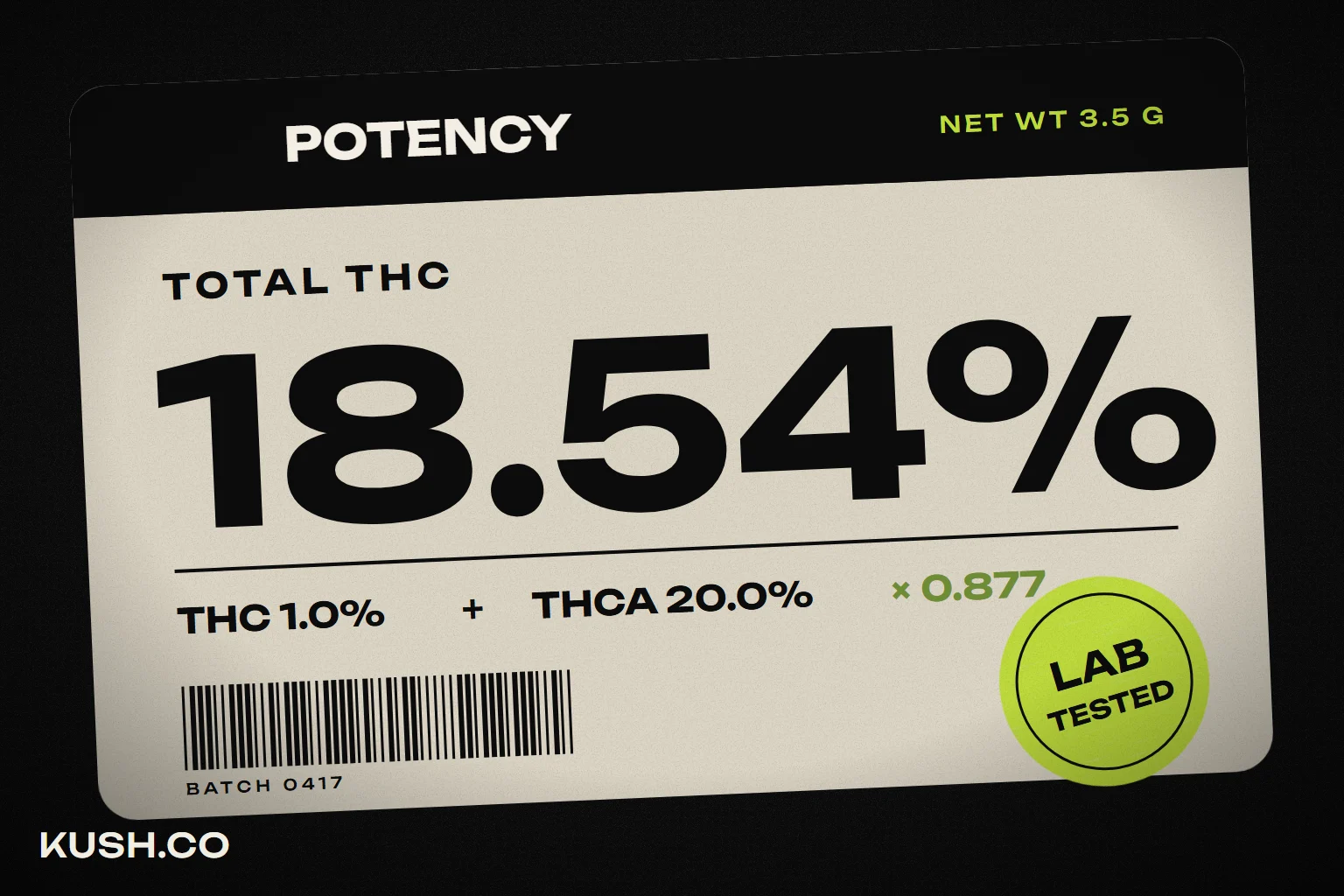
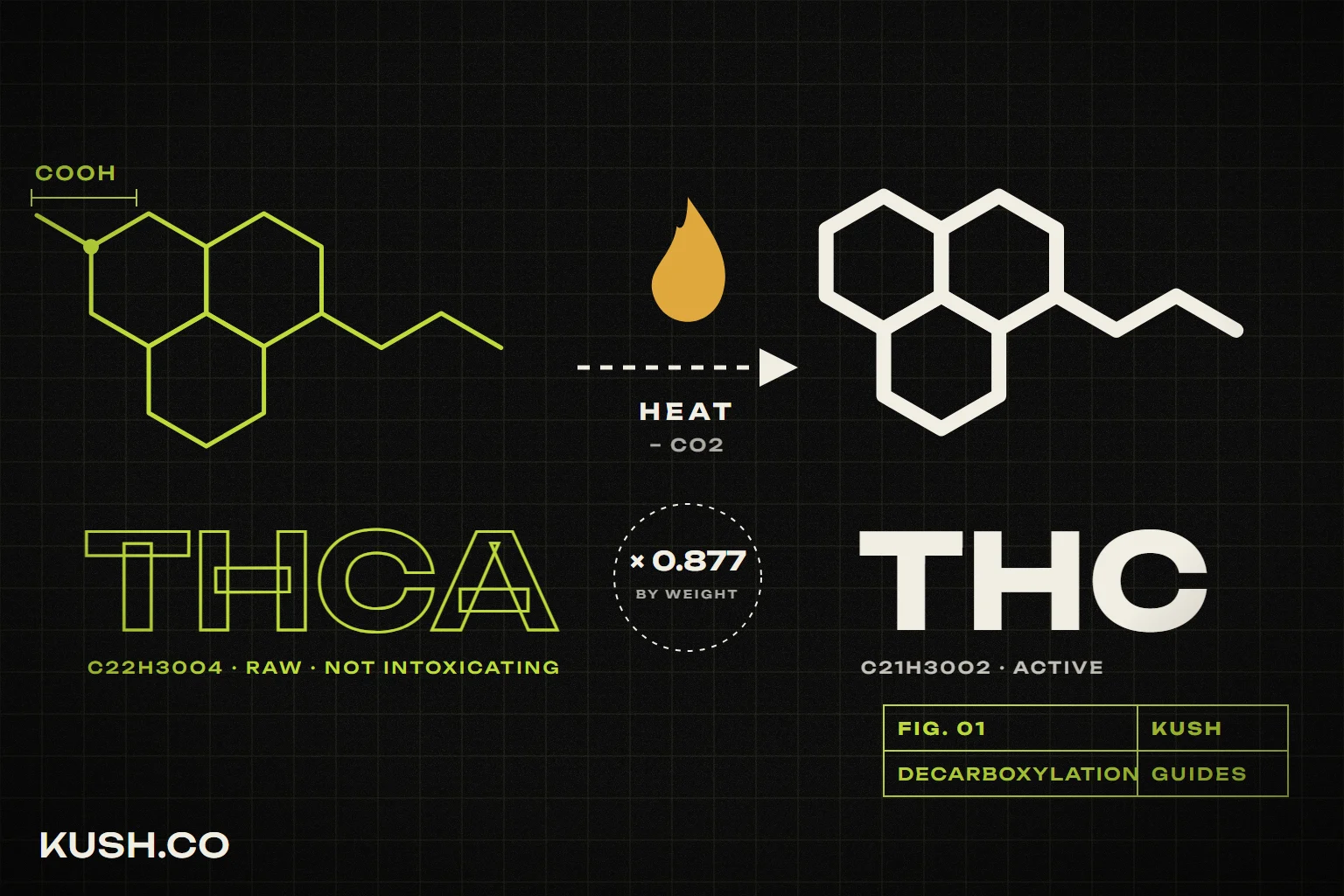
Check which THC figure you are looking at. Flower labels may show THC, THCA and total THC separately; our guide to THCA vs THC explains how they relate, and THC, total THC and potency labels covers the calculation.
Then look past the headline number: the test date, the laboratory and, where listed, the terpenes. Our guide to reading a certificate of analysis shows where each one sits on a lab report.
Common questions
Is 20% THC a lot?
For flower it is about average. Washington's regulator reported an average of 21% for flower in 2022.
Is 30% THC flower real?
Washington's regulator notes some flower tests as high as 35%. A Colorado study also found that most of the flower it tested came in well below its label, so treat very high numbers with caution.
What THC percentage is top shelf?
"Top shelf" is a store term, not a tested grade. No regulator cited here defines it by a THC number.
What is a good THC percentage for beginners?
Regulators link higher amounts of THC to a greater chance of negative effects, so a lower percentage means less THC in each inhalation. Edibles are measured differently, in milligrams per serving.
Sources and further reading
Kush is for adults 21+. This guide is educational; product rules and testing requirements vary by state. Our editorial standards & corrections policy.